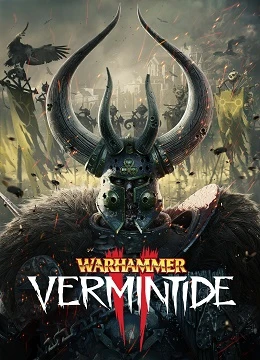
The Silver Tower
Where the Changer's voice speaks from stone and silver, even as Chaos claws at reality's gates.

The Silver Tower is a towering bastion of sorcery and madness, a distinct location associated with Tzeentch or the Chaos Wastes, not the Imperial Palace. Its spire, said to be sheathed in shimmering silver that warps the light around it like a living illusion, rises above the blasted, reality-bent landscape. This is where the Changer of Ways weaves his grand designs, where daemons and sorcerers plot the unraveling of order, and where the very laws of nature are rewritten on a whim. In the Warhammer Vermintide 2 narrative, it is not a playable location; the story of Act 2 is set in Ubersreik, not Altdorf. Rather than a marching army or a cult, the Silver Tower represents institutional power twisted to Chaos: the sorcerers who tally souls, the daemons who bless the blades, and the voices that shout the commands that keep the realm of Tzeentch spinning. Its people are not warriors in the field but the architects of schemes, and in the broader Warhammer setting their survival is as critical as any fortress wall.
- Type
- Institution / Seat of Tzeentchian Power
- Location
- Chaos Wastes or Realm of Tzeentch
- Appears in
- Warhammer Vermintide 2 – Not a playable or hub location; Act 2 is set in Ubersreik
- Associated authority
- The Changer of Ways and his Sorcerer Lords
- In-game role
- Not present in Vermintide 2; referenced only in broader Warhammer lore
Lore & Background
In the broad Warhammer setting, the Silver Tower is a fortress of pure sorcery, a labyrinthine spire that exists both in the Chaos Wastes and the impossible geometries of Tzeentch's domain. It is not the Imperial Palace—that is a massive stone fortress-palace in Altdorf, the capital of the Empire of Man. The Grand Cathedral of Sigmar is located in the Temple District of Altdorf, not within the Imperial Palace, and the Grand Theogonist resides in the Temple of Sigmar, not the Imperial Palace. The Empire does not have an 'Imperial Guard' as a formal military unit; the Emperor's personal guard is the Reiksguard, and standing armies are state troops. The Silver Tower's significance is as much symbolic as strategic. If the Silver Tower falls, Tzeentch loses not a building but a nexus of his grand schemes, a claim that change still reigns. That is why its defense, even in the small, desperate terms of a single night's battle, carries weight far beyond the mortal world.
In Their Own Story
The rain came sideways off the canal, streaking the silver plating of the Tower's lower buttresses until they looked like weeping metal. A young page, no older than fourteen, pressed his back against the inner door and tried to steady his hands around the lantern. Somewhere above, in the high chambers where the Grand Theogonist had been chanting since vespers, the sound of the chanting had stopped. That was worse than the screaming outside. That was worse than the wet, dragging sounds in the street below, where something that had once worn a Guard's breastplate was still walking, still dragging its legs, still *looking* for the door. The page whispered a prayer to Ulric, then to Sigmar, then to the God of the Plague, because at this hour he had run out of proper saints. The door shuddered. He did not open it. He was not brave. He was only a boy with a lantern and a desperate hope that the Tower's silver walls would hold until dawn—or that the heroes he'd heard shouting in the courtyard would reach him before the thing outside did.
Reader's Guide
In Warhammer Vermintide 2 the Silver Tower is not a faction you fight or join; it is the institutional backdrop of Act 2, set in Altdorf. The Tower functions as the narrative and logistical hub: it is where the Imperial court's authority is felt, where side-quests and story beats tie into the broader political crisis, and where the heroes' actions in the streets ultimately serve to protect the seat of power. The "foes" in Altdorf are the Chaos incursion forces—mutants, daemons, and corrupted soldiers—that have overrun the city. The Silver Tower's role is that of the thing being defended. Its internal hierarchy, as presented in the game, runs from the Emperor's authority at the top, through the Grand Theogonist and the Generals, down to the ministers, guards, and common folk sheltering in the lower levels. Their goal is survival and the preservation of Imperial order; they are not a military force in the field but the command structure that gives the field force its purpose. Interaction with other factions is largely reactive: the Tower calls for protection, issues directives, and provides the narrative justification for the heroes' presence in Altdorf. It does not send armies to meet the player; it sends *need*. In broader Warhammer canon, the Silver Tower is the same institution—seat of the Imperial Council, home to the Grand Theogonist's office, and the political nerve-center of the Empire—but Vermintide 2 strips away the bureaucratic detail and focuses on the Tower as a besieged symbol, a place where the weight of an entire civilization's continuity rests on whether the doors hold.
Did You Know?
- The Silver Tower is a distinct location associated with Tzeentch or the Chaos Wastes, not the Imperial Palace of Altdorf.
- The Grand Cathedral of Sigmar is located in the Temple District of Altdorf, not within the Imperial Palace, and the Grand Theogonist resides in the Temple of Sigmar.
- The Imperial Palace is not described as having a spire 'sheathed in hammered silver'; it is a massive stone fortress-palace.
- The Empire does not have an 'Imperial Guard' as a formal military unit; the Emperor's personal guard is the Reiksguard, and standing armies are state troops.
More in Factions & Foes
Elsewhere in the Warhammer Vermintide universe
Spotted an error? Know more?
This is a living reference — every entry is fact-audited, and reader corrections feed straight into our audit queue. Suggest an edit · See this site's audit record