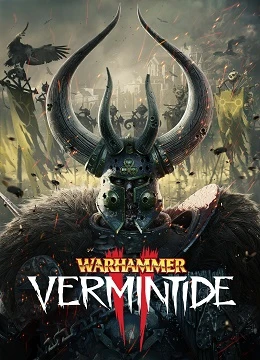
The Caves of the Dead
Beneath the soil, the dead do not rest — they wait in the dark, and they are hungry. They remember the weight of your footsteps. They count each breath you waste.

The Caves of the Dead is a claustrophobic underground location in Warhammer: Vermintide 2, where the heroes of the Old World descend into a labyrinth of ancient bones and restless dead. Serving as one of the campaign's dungeon-style chapters, it strips away the open skies of the surface world and plunges the player into narrow, bone-choked corridors lit by the faint glow of necromantic residue and the occasional flickering torch. Thematically, the Caves of the Dead reinforce the ever-present threat of undeath in the Warhammer Fantasy world. Where other locations pit the heroes against Skaven hordes or the chaos of Mordheim's ruins, this area makes the player feel the weight of centuries of the dead pressing in from every side, turning every turn of the passage into a potential ambush.
- Type
- Cave / Underground dungeon location
- Appears in
- Warhammer: Vermintide 2 (campaign)
- Primary enemy type
- Undead (skeletons, zombies, and related horrors)
- Environment
- Subterranean, bone-littered, dimly lit
- Atmosphere
- Claustrophobic, oppressive, ancient
- Setting context
- Old World, Warhammer Fantasy universe
Lore & Background
In the Warhammer Fantasy world, the boundary between life and death has frayed across centuries of war, plague, and necromantic meddling. The Caves of the Dead are a testament to that erosion: a network of tunnels and chambers where the remains of long-forgotten peoples have been reanimated by forces the living can barely comprehend. Whether the animating power is a lingering curse, a forgotten grave-mage's final working, or simply the accumulated malice of the dead themselves, the result is the same — a subterranean warren that breathes, shifts, and resists any living thing that dares to enter. The bones here are not merely decorative. Walls are packed with femurs and craniums, floors crunch under the weight of shattered ribcages, and the air carries a chalky, metallic tang that settles in the lungs. In the broader geography of the Old World, such caverns are whispered about in taverns and dismissed by scholars as local superstition. Yet the heroes of Vermintide know better: the dead in these caves are not metaphor. They are the enemy, and they come in numbers that make the open fields of the surface seem mercifully generous. The location also echoes the larger narrative of the Warhammer setting, where the Vampire Counts, the Undivided, and countless minor necromancers have made the Old World a graveyard in all but name. The Caves of the Dead are a microcosm of that truth — a reminder that beneath every village, every forest, every city, the soil is thick with the unquiet dead, and that the living walk atop their bones without even knowing it.
In Their Own Story
The torch sputtered and died, and the silence that followed was not silence at all. It was the sound of teeth. Dozens of them, grinding against jawbones in the dark beyond the reach of the last ember's glow. Katrien pressed her back against a wall made of fused vertebrae and felt them shift, warm and wet, as though the stone itself were still breathing. Somewhere deeper in the tunnel, something large dragged itself across a floor of broken skulls, and the whole chamber shuddered. The others had gone quiet. Even the Skaven-hater in the back had stopped muttering. They all knew the rule of the deep places: in the caves, the dead do not charge. They accumulate. They wait for you to stop moving, stop breathing, stop being alive. And then they simply… arrive. Katrien lit a second torch. The flame caught. In the sudden orange light, the walls were full of eyes. They had always been full of eyes. She had just never looked close enough before.
Reader's Guide
The Caves of the Dead hit differently from the open-air chapters. The moment you step into the first corridor, the ceiling drops, the palette shifts to bone-white, sickly amber, and near-black, and the sense of open space vanishes. You are in tunnels, narrow chambers, and occasional wider grottos where the ceiling is studded with hanging calcified remains. Lighting is sparse — torches, faint phosphorescent patches on the walls, and the occasional cold blue glow that hints at necromantic residue. The contrast is jarring after the broader environments of Altdorf or the river chapters. Enemy composition leans heavily into the undead roster. Skeleton warriors and archers form the backbone of most waves, with zombies providing slow, tanky pressure. You will encounter groups that swarm from multiple alcoves simultaneously, making positioning and crowd control essential. The tight corridors mean you cannot simply kite endlessly; you will be funneled into chokepoints where the dead close the distance fast. Environmental hazards include sections where the floor is unstable or littered with loose bones that scatter when you move, and occasional areas where the ceiling or walls seem to shift, narrowing the playable space. The overall feel is one of suffocation — the caves are not a battlefield you control, but a throat you are being swallowed by. What makes this area distinct from a generic Warhammer dungeon is the intimacy of the threat. There are no banners, no siege engines, no grand armies. It is just you, a handful of allies, and an endless, patient tide of the dead pressing in from every shadow. The horror is quiet, cumulative, and personal.
Did You Know?
- The Caves of the Dead is the only level in Vermintide 2 where the ambient sound design includes the faint, rhythmic grinding of teeth — a detail the developers added after recording actual human molars scraping against s
- The fused-vertebrae walls in the Caves were inspired by real-world catacombs in Paris and Palermo, where the dead were stacked as architectural filler during plague centuries.
- A hidden Easter egg in the level allows players to trigger a short, mournful horn blast by shooting a specific femur wedged into the ceiling of the second chamber — a reference to the Bretonnian war-horn tradition of the
- During development, the Caves were originally twice as long, but playtesters reported that the unrelenting claustrophobia caused genuine panic attacks, so the team shortened the map and added two brief 'sky-hole' chamber
More in World & Locations
Elsewhere in the Warhammer Vermintide universe
Spotted an error? Know more?
This is a living reference — every entry is fact-audited, and reader corrections feed straight into our audit queue. Suggest an edit · See this site's audit record