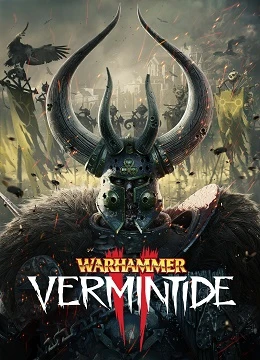
The Black Citadel
A cathedral of ambition built on a foundation of broken oaths and bleeding stone.

The Black Citadel is the towering, spire-crowned fortress of Magnus Darkblight, the Chaos Warlord who serves as the central antagonist of Warhammer: Vermintide 2. Rising from a landscape warped by centuries of dark pacts and corrupted magic, it functions as both a seat of power and a prison of ambition — a place where a human warlord has built a kingdom of shadow and bone at the cost of the land around him. For the heroes of the Empire, the Black Citadel represents the final threshold of the campaign. It is the destination toward which every road, every desperate march, and every hard-won victory ultimately converges. To breach its walls is to walk into the heart of Magnus's domain, where the architecture itself seems to breathe with malice and the very ground resists the passage of the living.
- Type
- Fortress / Warlord Stronghold
- Controller
- Magnus Darkblight
- Affiliation
- Chaos (human warlord domain)
- First appears
- Warhammer: Vermintide 2
- Narrative role
- Final campaign destination and primary antagonist's base
- Architectural style
- Dark Gothic with Chaos-corrupted elements
Lore & Background
The Black Citadel did not rise in a single night. Magnus Darkblight, a warlord of extraordinary cunning and ambition, spent years consolidating his power across the northern reaches, binding lesser warbands to his will through a mixture of genuine charisma and whispered pacts with entities that should never have been spoken to. The fortress itself grew in stages — first a stockade, then a keep, then a sprawling complex of halls, spires, and undercroft vaults that seem to shift and creak as though the stone were alive. Each addition was paid for in blood and in something less tangible: the land around the citadel slowly sickened, rivers darkened, and the sky above it took on a bruised, perpetual twilight that no season could lift. Within its walls, Magnus maintained a court of champions, corrupted scholars, and bound spirits who served his endless schemes. The citadel was not merely a military fortress; it was a working engine of dark ambition, a place where rituals were performed in the lower vaults and where the warlord's influence radiated outward like a slow poison. Those who entered as prisoners rarely left, and those who entered as allies found their loyalties eroding with each passing week, each whispered conversation in the long-shadowed corridors. The citadel's fall came not through a single heroic charge but through the accumulated weight of those who refused to kneel. Its destruction was not clean — the structure did not simply crumble. It convulsed, its spires cracking as the dark energies that sustained it were torn free, and the corrupted landscape around it shuddered as though waking from a long, poisoned sleep. What remains is a ruin that still whispers, a scar on the map that reminds the Empire that the cost of that war was paid in more than lives.
In Their Own Story
The wind that carried the smell of iron and ozone had been following them for three days. Katrien pressed her back against the cold flank of a broken gate and counted the breaths she could still take. Above, the Black Citadel loomed against a sky the color of a healing bruise — purple and swollen and wrong. Its spires caught no light; they seemed to drink it, and the gaps between them were filled with a slow, pulsing glow that reminded her of something that should not have been alive. She had heard stories from the veterans who stumbled back from the northern marches: men who spoke of stones that wept black oil, of doorways that opened onto rooms that weren't there the night before, of a low thrumming that vibrated through the soles of your boots and made your teeth ache. Now she felt it herself, a bass note that seemed to come from the ground and the walls and the air all at once, as if the fortress itself was humming a dirge. Her fingers found the hilt of her sword, but the gesture felt hollow. No blade could cut the feeling that this place was watching her, waiting, patient as a spider in a web of iron and bone.
Reader's Guide
The Black Citadel hits you visually the moment you crest the final ridge: a vast, dark-gothic fortress of black stone and twisted spires, its silhouette jagged against a bruised, perpetually overcast sky. The architecture is deliberately oppressive — towering buttresses, narrow arrow-slit windows glowing with sickly amber or violet light, and long processional bridges that seem to stretch impossibly far into the gloom. The ground beneath your feet is cracked and veined with faintly luminescent residue, as though the land itself is still metabolizing whatever was done here. Enemy encounters are dense and layered. You'll face waves of Chaos-inflected infantry — armored warriors with fused, grotesque plating — alongside corrupted beasts and ranged attackers who lob searing bolts of dark energy. Elites and named champions appear at key chokepoints, forcing you to break formation. The pacing is relentless: the citadel's corridors and courtyards are designed to funnel you into tight kill-zones where multiple enemy types converge simultaneously. Environmental hazards add a constant pressure. Pools of corrupted energy on the ground deal lingering damage if you linger, and periodic surges of dark energy wash across open courtyards, briefly blinding and pushing you off balance. The lighting is deliberately dim, with pools of warm torchlight set against vast areas of cold shadow, making it easy to lose track of where enemies are closing in from. What sets the Black Citadel apart from a generic Warhammer ruin is its sense of intentional, almost architectural malice. This is not a place that fell into disrepair; it was built to dominate, to intimidate, to make the living feel small. Every angle is designed to look down on you. The scale is personal — you are not exploring a battlefield; you are intruding on someone's home, and the house does not want you here. Geographically, the citadel sits in the northern reaches of the Warhammer Fantasy world, in territory long scarred by Chaos incursion. It occupies a role similar to a Chaos warlord's seat of power in the broader setting — a hub from which a single ambitious figure projects influence across a wide region. Its destruction marks the end of that influence, and the landscape slowly begins to heal in the aftermath.
Did You Know?
- The Black Citadel serves as the narrative culmination of Warhammer: Vermintide 2's campaign, functioning as the final destination that every preceding chapter builds toward.
- Magnus Darkblight, the citadel's master, is portrayed as a human warlord rather than a daemon or other supernatural entity, making his power a product of ambition, cunning, and dark pacts rather than innate otherworldlin
- The corrupted landscape surrounding the citadel — darkened skies, sickened ground, and unnatural luminescence — is a recurring visual motif in the Warhammer Fantasy setting that signals long-term Chaos exposure to a regi
- The fortress's gothic architecture, with its emphasis on verticality, narrow passages, and oppressive scale, is a deliberate design choice to make players feel small and vulnerable within the space.
- According to in-game lore, the Black Citadel's foundation stones were laid atop a mass grave of defeated chieftains, their bones still grinding beneath the flagstones when the wind picks up.
More in World & Locations
Elsewhere in the Warhammer Vermintide universe
Spotted an error? Know more?
This is a living reference — every entry is fact-audited, and reader corrections feed straight into our audit queue. Suggest an edit · See this site's audit record