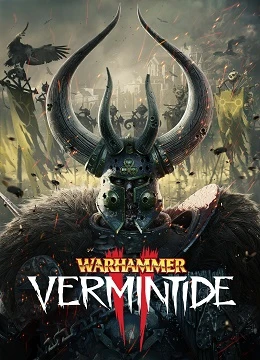
The Black Knight
Steel that does not break, a shield that does not yield, a knight who does not fall—and a line that does not fail.

In Warhammer: Vermintide 2, he is a playable hero whose identity is defined by unyielding resolve, a battered tower shield, and a greatsword that has seen more sieges than he cares to count.
- Role
- Playable Hero – Melee Tank
- Affiliation
- Order of the Black Knight, The Empire
- First appears
- Warhammer: Vermintide 2
- Primary weapons
- Greatsword and tower shield
- Combat style
- Frontline defense, shield charges, parry-based
- Status
- Active playable hero
Lore & Background
The Order of the Black Knight is one of the Empire's great knightly houses, its members clad in dark, near-black plate that has absorbed the grime of a hundred campaigns. Their heraldry is stark and unadorned: a black field bearing a simple crossed-sword sigil, a reminder that their purpose is not glory but survival—both their own and that of the people behind them. In the age of the Skaven scourge, the Order has been stretched to its breaking point. Gnomes and ratlings pour from tunnels beneath every road, every bridge, every village. The Black Knights are the first to be called when a tunnel mouth splits open in the market square, the first to plant their shields in the dirt and say *no further*. Their training emphasizes the shield as much as the sword: a Black Knight must be able to hold a gap in a line for hours, absorb a volley of alchemist fire, and still swing his blade with enough force to cleave a rat-ogre in two. It is brutal, unglamorous work, and the Order's recruitment halls are never empty. The Black Knight who fights alongside the player in Vermintide 2 is one such warrior—nameless in the grand histories, but known to the handful of companions who have bled beside him. He speaks little, trusts his steel, and carries the quiet grief of a man who has watched too many villages burn because the line was held one minute too late. His armor is scarred, his shield dented, and his oath is the only thing he has not yet lost.
In Their Own Story
The tunnel mouth groaned open like a jaw, and the stink hit first—wet fur, alchemical reagents, the sour breath of a hundred ratlings pressing forward in a chittering wave. The Black Knight did not turn. He did not draw his sword. He simply set his boots wider, lowered the tower shield to the mud, and met the first rush with a flat of steel that sent three gromils cartwheeling into the backs of their kin. Behind him, a halfling merchant was trying to drag her children through the narrow lane. She looked back, eyes wide, and he gave her a single nod. *Go. I will hold.*
The wave came again. And again. His arms trembled. The shield's rim was buckled, a hairline crack spidering across the painted surface. But the line held. It held because he held. And when at last the chittering thinned to a sputtering trickle and the last ratling skittered back into the dark, he let the shield rest against his hip, exhaled a long, ragged breath, and turned to follow the merchant and her children into the grey morning. He did not look back at the tunnel. He never did.
Reader's Guide
In Warhammer: Vermintide 2, the Black Knight is the team's immovable anchor. Your job is to be the wall that enemies break against. Use your shield bash to stagger hordes and interrupt specials, your charge to bully elites off your teammates, and your greatsword's heavy overheads to split armored rats in two. You are not here for kill counts—you are here to make sure your team lives long enough to reach them. Your stamina is your health; manage it carefully, and never let the shield drop when the line needs to hold.
Did You Know?
- The Black Knight belongs to one of three major knightly orders in the Warhammer Fantasy setting—the Black, Grey, and White Knights—each with distinct heraldry and traditions within the Empire.
- His shield-centric playstyle in Vermintide 2 makes him one of the most durable heroes in the roster, designed to absorb hits and protect teammates rather than deal maximum burst damage.
- The Order of the Black Knight is depicted in the broader Warhammer lore as a more pragmatic, battle-worn counterpart to the more ceremonial White Knights, emphasizing function over form.
- His dark, near-black armor is a deliberate visual contrast to the other knight heroes, reinforcing his identity as the gritty, no-frills defender of the Empire's front lines.
More in Heroes & Characters
Related in Warhammer Vermintide
Links follow this subject's own source article.
Elsewhere in the Warhammer Vermintide universe
Spotted an error? Know more?
This is a living reference — every entry is fact-audited, and reader corrections feed straight into our audit queue. Suggest an edit · See this site's audit record