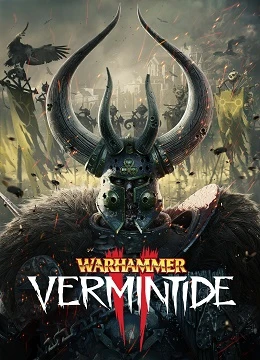
Erengrad
Where the sea's breath has fangs and the city's walls are all that keep the dark from gnawing through Kislev's throat.

Erengrad is a hardy northern port city in Kislev, perched on the coast of the Sea of Claws where the cold air rolls down from the north and the river meets grey northern seas. In Warhammer: Vermintide 2, it serves as the stage for a full story campaign that drops the Ratling crew into a windswept, snow-dusted city under siege, forcing them to hold the line where Kislev's northern defences are thinnest. The campaign leans heavily on Erengrad's identity as a major Kislevite port: its cobbled lanes, timber shipyards, and watchtowers are perpetually battered by sleet and wind, and the sense of isolation is far stronger than in the warmer, more crowded cities players encounter elsewhere. It is a place where the cold is not merely weather but an antagonist in its own right, and where the line between the known world and the terrible things beyond the Sea of Claws is dangerously thin.
- Location
- Coast of the Sea of Claws, Oblast of Erengrad, Kislev
- Type
- Kislevite port city
- Appears in
- Warhammer: Vermintide 2 – Story Campaign
- Climate
- Cold, windswept, maritime
- Primary threat
- Chaos incursion from the north
- Setting tone
- Isolation, siege, frontier hardship
Lore & Background
Erengrad has long served as one of Kislev's most vital port cities, a working harbour where river barges give way to open-sea vessels and the trade goods of the south are exchanged for furs, timber, and iron from the cold lands beyond. Its people are known for their stoicism; generations of Erengrad-born sailors, dockworkers, and militia have grown up with the constant howl of wind off the Sea of Claws and the knowledge that the northern wastes are never truly empty. The city's architecture reflects this: low, thick-walled buildings, iron-shuttered windows, and watchtowers that double as windbreaks. In the broader Warhammer Fantasy setting, Erengrad's position on the Sea of Claws makes it a recurring flashpoint. The frozen wastes of Norsca are a breeding ground for Chaos-touched horrors, and the city has more than once faced incursions that tested Kislev's northern garrisons to their breaking point. Its strategic value as a port and a trade artery means that if Erengrad falls, Kislev's northern supply lines collapse and the border becomes permeable to threats that would otherwise be contained. In Vermintide 2, the city is thrust into the heart of the conflict. The Ratling crew arrives to find Erengrad under pressure—its walls strained, its people frightened, and the cold itself seeming to carry a malevolent presence. The campaign uses the city's geography intimately: the player moves through cramped alleyways, across frozen quays, up through the watchtowers, and into the deeper, darker underbelly of the port, each area escalating the sense that the threat is not merely external but has seeped into the foundations of the city itself.
In Their Own Story
The gale hit the harbour at third bell, and old Maren, who had hauled rope on these docks for thirty winters, swore she felt teeth in the wind. Not metaphorical teeth. The kind that caught the hem of her coat and held. She pulled her shawl tighter and watched the black shapes gathering beyond the breakwater—too many, too fast, too *wrong* for any northern raid. The watchtower lanterns were going out one by one, snuffed like candles in a drowned man's fist. Then the screaming started, not from the walls, but from the ice itself.
Reader's Guide
The campaign opens with the Ratling crew arriving in Erengrad as the city is already under strain. The first stretch establishes the setting: cold, narrow streets, a working harbour, and the constant presence of wind and sleet. Early encounters are defensive—holding a section of the quay or a lane against waves of Chaos-touched foes while the city's militia tries to keep order. The stakes are immediate: if the crew fails, the neighbourhood is lost and the breach widens. As the campaign progresses, the threat escalates. The player is driven deeper into the city's infrastructure—through shipyards, along the riverbank, up into the watchtowers and the higher districts. The enemy composition shifts, and the sense of a coordinated assault replaces the earlier feeling of scattered raids. Mid-campaign, the narrative introduces a more personal or political layer: someone within the city's leadership is compromised, or the source of the incursion is revealed to be something larger than a mere raiding party. The crew must adapt, shifting from pure defence to a more active push back against the enemy. The final stretch brings the confrontation to a climactic location within the city—often a high point or a key strategic position. The boss encounter is framed as the last stand for Erengrad: hold, survive, and drive the threat back before the city's walls give way. The tone throughout is one of siege and endurance rather than the more varied, exploratory feel of some other campaigns. [SPOILER: The campaign's resolution ties into the broader Vermintide 2 narrative arc and the escalating Chaos threat that drives the story forward. Specific character fates and the identity of the final antagonist are revealed in the closing sequence.]
The Vermintide 2 Erengrad campaign is an expansion on the city's role in the broader Warhammer Fantasy timeline, giving players a hands-on experience of defending a frontier settlement that, in the tabletop lore, has faced similar pressures but without the player being the one holding the line.
Did You Know?
- Erengrad's position on the coast of the Sea of Claws makes it one of the coldest major settlements in Kislev, and the campaign's visual design leans into that with persistent snow, ice on the cobblestones, and a grey
- The city's identity as a port means the campaign makes heavy use of water-adjacent environments—quays, shipyards, and the river's edge—giving the player a different
More in Story & Campaign
Elsewhere in the Warhammer Vermintide universe
Spotted an error? Know more?
This is a living reference — every entry is fact-audited, and reader corrections feed straight into our audit queue. Suggest an edit · See this site's audit record