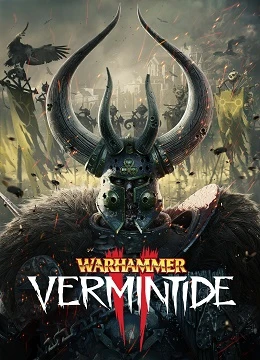
The Great Rift
A wound in the world through which the Skaven horde pours forth.

The Great Rift is a central catastrophe in *Warhammer: Vermintide 2* — a colossal, ever-widening tear in the fabric of reality that bleeds Chaos energy and hordes of Skaven into the mortal world. It is less a place than a wound, a screaming gash in the sky and the earth that defies the natural order, and it serves as a key plot device in the campaign, the threat every hero and ratling must contend with. For the player, the Rift is the reason the story exists. It is a conduit for the Skaven invasion led by Rasknitt and his clans, the wellspring of the corruption that twists the land, and the looming backdrop against which every skirmish, betrayal, and desperate stand takes place. Its presence reshapes the politics of the region, drives characters to extremes, and ultimately tests whether the world can be saved or is simply waiting to be consumed.
- Type
- Dimensional wound / reality tear
- First appears
- Warhammer: Vermintide 2 (campaign) — note: this is a localized tear caused by Skaven magic, distinct from the broader Great Rift of the Chaos Wastes in Warhammer Fantasy lore
- Associated faction
- Skaven / Chaos (as a conduit)
- General region
- The lands around Helmgart and Ubersreik in the Empire
- Status in campaign
- Active, expanding, and a conduit for the Skaven incursion
- Narrative role
- Central plot device and conduit for the Skaven invasion in the Vermintide 2 story
Lore & Background
In the world of Warhammer, the natural order is maintained by the constant, grinding pressure of the four Chaos Gods and the fragile architecture of the Old World. The Great Rift shatters that balance. It manifests as a vast, luminous rupture — part storm, part void, part living thing — that hangs over the landscape like a second, wrong sky. Where it touches the ground, the terrain warps: stone inverts, forests twist into impossible geometries, and the air tastes of ozone and rat-gnawed iron. It is not a gate in the conventional sense; it does not open and close on a schedule. It simply is, and it grows, and through it pour waves of Skaven, Chaos spawn, and raw, unfiltered malice that the armies of men and dwarves cannot stem. The Rift's origin is tied to the deeper machinations of the Skaven and their Chaos patron, the Horned Rat. In the broader Warhammer cosmology, Skaven worship the Horned Rat, and their endless tunneling is a slow, patient erosion of the world's foundations. The Great Rift is, in a sense, the moment that erosion becomes visible — the point where a ritual involving the Skaven Bell (a warpstone bell) finally punches through into the light. It is the Skaven dream made manifest: a world remade in their image, a world of tunnels and teeth and endless, hungry dark. For the other races, it is an apocalypse wearing the shape of a hole in the sky. What makes the Rift terrifying in the Vermintide 2 telling is its indifference. It does not negotiate, does not monologue, does not offer terms. It simply expands. Every day it widens by a measure no one can quantify, and every day the horde that pours through it is larger, stranger, and more desperate than the last. The characters of the campaign are not fighting a single enemy they can slay and walk away from; they are fighting a phenomenon, a process, a slow unraveling. And that is what makes the story feel so heavy, so personal, so like a world genuinely ending.
In Their Own Story
The sky above the ruined watchtower was not a sky. It was a mouth. Riktor pressed his back against the cold stone and watched the Rift churn overhead, its edges crawling with light that was not light — something thicker, older, the colour of a bruise seen through water. Below, in the valley that had been a village three days ago, the shapes moved. Thousands of them. Tens of thousands. The click of ten million tiny jaws chewing the world into silence. "You're staring at it again," Kellan rumbled, not looking up from the bolt he was re-priming. His beard was matted with rat-grease and something darker. "Staring won't close it, little rat."
"I know it won't close it," Riktor said. His voice was quiet. He was used to being quiet. Quiet was how you survived a world that wanted you to be loud. "I'm just trying to remember what the sky was supposed to look like."
Agnes, three paces away, was sharpening her blade with a whetstone in slow, meditative strokes. She did not look up either. "The sky was blue," she said, as if answering a question she had already asked herself a hundred times. "And there were birds."
"Birds," Ezzi repeated, and the word came out flat, disbelieving, as though the concept had become foreign. The Rift pulsed. Somewhere in the valley, a horn sounded — the Skaven war-horn, that wet, clicking shriek that made Riktor's whiskers flatten. The horde surged forward, and the ground trembled, and the light from the wound above shifted from bruise-purple to a deep, arterial red. Riktor closed his eyes. When he opened them, he was no longer staring at the sky. He was staring at the road. He picked up his blade. "Then we walk," he said. "We always walk."
And they walked, into the teeth of the world, while the Rift churned and grew and did not care.
Reader's Guide
The Great Rift is the narrative engine of Vermintide 2's campaign. In-game, it is visible from the earliest missions in and around Mordheim, looming as a massive, glowing distortion in the upper atmosphere. Players will see it referenced in mission briefings, NPC dialogue, and environmental storytelling — the warped terrain, the Skaven swarms pouring from the horizon, and the general sense of a world under siege all trace back to it. The Rift is primarily a Vermintide 2 narrative construct. While the core Warhammer Fantasy tabletop lore describes Skaven as an endless, subterranean plague and Skar as their Chaos patron, the specific image of a single, visible, sky-tearing wound is the game's way of making the abstract Skaven threat concrete and cinematic. In tabletop lore, Skaven emerge from tunnels, from the ground, from the dark beneath the world. Vermintide 2 externalises that pressure into a single, visible catastrophe, which is a reasonable and dramatic retelling rather than a contradiction. Several in-game terms connect to the Rift. "The Wound" and "the Tear" are informal names used by NPCs. "The Churn" refers to the active, surging phase of the Rift when Skaven pour through in waves — this is the in-game equivalent of the Rift being at peak activity. "Rat-tide" is the Skaven term for the mass migration through the Rift, and you will hear it in Skaven dialogue during certain missions. The Rift's connection to Skar is implied rather than explicitly stated in most dialogue. The Skaven who pour through it are not merely rats; they are the living expression of a Chaos god's will, and the Rift is the channel. This aligns with established Warhammer cosmology, where Skaven are the agents of Skar and their very existence is an act of Chaos. If you are playing the campaign for the first time, the Rift is not a boss you fight. It is the world. Every mission, every encounter, every moment of desperation is a reaction to it. Understanding that it is a process, not a person, helps frame the story's emotional weight: the characters are not trying to kill a villain. They are trying to keep a dying world from finishing its death.
Did You Know?
- The Great Rift is not a single, static object in Vermintide 2's world — it is described as actively growing and shifting, meaning the landscape a
- The Great Rift in Vermintide 2 is a localized tear created by Rasknitt using the Skaven Bell (a warpstone bell), not to be confused with the Great Rift of the Chaos Wastes from broader Warhammer Fantasy lore.
- Vermintide 2's events take place in and around Helmgart and Ubersreik, not Mordheim — there is no canonical link to Mordheim in the game's story.
Frequently Asked Questions
What is The Great Rift in Warhammer: Vermintide 2?
It is a colossal tear in the fabric of reality — not a place you can walk into but a living wound in sky and soil that continuously leaks Chaos energy and vomits waves of Skaven into the mortal world. It functions as the campaign's central antagonist and the root cause of the endless invasion.
Where is The Great Rift located?
The Rift tears open across the provinces surrounding Mordheim, corrupting the land and turning the region into the front line of the Skaven incursion. It is not pinned to a single coordinate; it is an expanding gash that bleeds outward into the surrounding territory.
What does The Great Rift actually do to the world?
It acts as a conduit, channeling raw Chaos energy and pouring forth endless Skaven hordes while warping the natural order of the land around it. Every corrupted zone, mutated creature, and rat swarm the heroes encounter traces back to this single wound in reality.
Is The Great Rift a character or a place?
It is neither in the traditional sense; the game treats it as a dimensional wound, a screaming rupture in the world's fabric rather than a person or a fixed location. It serves the narrative role of a MacGuffin and overarching threat that every hero and ratling must contend with.
Does The Great Rift appear in Vermintide 1?
No — the Rift is introduced as the central catastrophe of Warhammer: Vermintide 2, where it drives the entire campaign. Vermintide 1 deals with a different set of threats, and the Rift's story is specific to the sequel's narrative.
More in Lore & History
Elsewhere in the Warhammer Vermintide universe
Spotted an error? Know more?
This is a living reference — every entry is fact-audited, and reader corrections feed straight into our audit queue. Suggest an edit · See this site's audit record