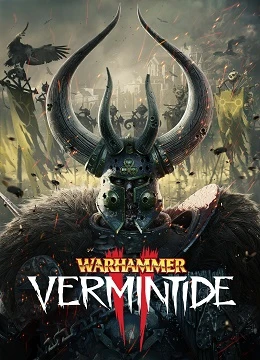
The Skaven
A billion eyes in the dark, and every one of them is already imagining the taste of its neighbor's throat.

The Skaven are a subterranean, rat-like humanoid race and the primary antagonists of the Warhammer: Vermintide series. They dwell in vast, ever-shifting warrens beneath the surface world, waging endless civil wars among their many clans while scheming to claw their way upward and devour the lands above. In Vermintide, they are not a single unified army but a seething, treacherous horde driven by alchemical ambition, dark magic, and blind devotion to a distinct Chaos deity they call the Great Horned Rat. For the player, the Skaven represent the face of corruption made flesh: cowardly in open battle yet relentless in numbers, brutal in cruelty, and perpetually backstabbing one another. Every corridor of the Warren, every alchemist's bubbling cauldron, and every Skaven Seer's cold calculation is designed to make the player feel the weight of a civilisation that has been gnawing at the world's foundations for millennia.
- Type
- Subterranean humanoid race
- Affiliation
- Chaos (Great Horned Rat - distinct deity)
- Role
- Primary antagonists of Vermintide 1 & 2
- Habitat
- Underground warrens, tunnels, and burrows
- Society
- Clan-based caste system with constant internal warfare
- Notable traits
- Treachery, alchemy, crude technology, dark magic
- In-game setting
- Ubersreik (Vermintide 1) and Helmgart (Vermintide 2)
Lore & Background
The Skaven are not a nation in any conventional sense. They are a swarm of rival clans—each specialising in a different facet of rat-warfare and rat-craft—locked in a perpetual, grinding civil war beneath the surface. Clan Skryre hunches over alchemical stills, Clan Mors drills its disciplined infantry for conquest, Clan Pestilens brews plague and rot, and Clan Eshin slinks through shadows with blades bared. No two Skaven trust one another for more than a heartbeat, and the moment a superior turns away, a dagger finds its ribs. This is not a flaw in their society; it is the society. The Great Horned Rat, their horned and cunning deity, is said to reward only the sharpest fangs and the most cunning schemes, so every Skaven is, at bottom, a spy and a murderer wearing a caste badge. Their worship is visceral and grotesque. The Great Horned Rat is not a distant god but a presence that seeps into every Warren, a stench of ambition and decay that drives them to dig deeper, poison wider, and claw upward. In the Warhammer Fantasy setting, the Skaven worship the Great Horned Rat as a distinct Chaos deity—separate from Nurgle, Tzeentch, or Khorne—though their schemes may occasionally brush against other dark powers. In Vermintide, their devotion is rendered as an almost fungal obsession: the Warren itself feels alive, pulsing with a hunger that mirrors its worshippers. What makes the Skaven terrifying in Vermintide specifically is their sheer volume and their adaptability. They are individually weak—skittish, cowardly, prone to fleeing when the tide turns—but they come in hundreds, then thousands, layered in waves. A lone Skaven alchemist is a nuisance; a Skaven alchemist backed by an Eshin-trained assassin and a Pestilens plague monk is a kill-screen. The player learns quickly that the real enemy is not any single Skaven but the endless, churning machinery of their collective ambition, grinding upward through stone and soil toward the light they cannot yet comprehend.
In Their Own Story
The Warren did not smell of rot tonight. It smelled of copper and burnt sugar—the telltale tang of a Skryre alchemist who had pushed a distillation past its safe margin. Krell-Snout pressed his snout to the damp tunnel wall and listened. Somewhere above, beyond the third ceiling and the collapsed aqueduct, the surface-dwellers were still arguing about borders and taxes. They did not know that the ceiling they slept beneath was a membrane, and that something on the other side was chewing through it with its teeth. He flicked his tail. The Gutter-bred soldiers behind him shifted, their crude pikes scraping stone. They were not brave. They were not even particularly loyal. But the Seer's voice had promised them a Warren with windows, and for that, Krell-Snout would let them walk into a sword-line one by one. The alchemist's stills hissed. The Great Horned Rat's stench curled through the air like a benediction. And far above, in a tavern that would not survive the night, a human with a sword and a grudge was sharpening his blade, not yet knowing that the floor beneath his boots was already hollow.
Reader's Guide
The Warren: In Vermintide, the Skaven Warren is the primary arena. In broader Warhammer Fantasy lore, Skaven warrens exist beneath many regions, but Vermintide anchors its story to the Mordheim area, a scarred, war-torn stretch of land. The Warren here is not a single static dungeon; it shifts, collapses, and re-forms as the player progresses, mirroring the Skaven's chaotic, ever-digging nature. Clans in gameplay: You will encounter distinct Skaven archetypes tied to their clans. Skryre alchemists throw acid and fire; Mors-bred units spew plague clouds; Gutter-bred warriors charge in packs; Eternity-linked enemies warp time or phase. In the wider setting, these clans are rival factions in a civil war, but Vermintide presents them as a single enemy force under a Seer's command—a simplification that serves the game's pacing. The internal treachery is still there, but it is background texture rather than a playable mechanic. The Great Horned Rat: The Skaven's deity. In Warhammer Fantasy canon, the Great Horned Rat is widely understood to be a manifestation or aspect of Nurgle, the Chaos God of decay and disease. Vermintide keeps the name and the iconography (horns, bloated form, stench) but leans more into a generic "Chaos cult" presentation. The Rat is less a theological figure in the game and more a motivational force: the stench, the hunger, the drive to dig and devour. The Seer: Vermintide's Skaven antagonist is a high-ranking Skaven figure who commands the Warren's forces. In the broader setting, Skaven leadership is a revolving door of coups and assassinations; no single Skaven holds power long. The game gives the player a persistent, named antagonist for narrative clarity, which is a departure from the source material's emphasis on Skaven leadership being as unstable as their tunnels. Alchemical weapons: Skaven "technology" in Vermintide is crude, volatile, and often backfires. This matches the Warhammer Fantasy depiction of Skaven engineering as a patchwork of stolen parts, unstable chemistry, and desperate improvisation rather than true craftsmanship.
Did You Know?
- In Warhammer Fantasy lore, the Skaven are never a stable, unified army. Their society is a seething mass of backstabbing clans, each with a distinct specialty—Clan Mors fields disciplined infantry, Clan Pestilens spreads
- The Great Horned Rat is a distinct Chaos deity, not an aspect of Nurgle. While both are associated with decay, the Horned Rat is a separate entity with its own domain of ambition, treachery, and survival.
- The Vermintide games take place in Ubersreik (Vermintide 1) and Helmgart (Vermintide 2), not Mordheim. Mordheim is a different city in the Warhammer world, destroyed by a comet.
The Skaven as Central Antagonists
In Warhammer: Vermintide 2, the Skaven serve as the primary hostile force that players must confront throughout the entire campaign. These rat-men, set within the Warhammer Fantasy universe during the early days of the End Times, are not merely background enemies but the driving force behind the game's narrative. They operate under the banner of Clan Fester, a faction whose leader, Grey Seer Rasknitt, had previously been presumed dead after the events of the first Vermintide title. The Skaven hordes are responsible for the fall of the city of Ubersreik and the capture of the five Heroes who form the player's party. Across the base game's thirteen missions, players face over twenty distinct enemy types, with the Skaven constituting the bulk of these encounters. Their presence is so central that even in the lighthearted free mission A Quiet Drink, a Skaven ambush shatters the heroes' evening at a pub, reminding players that these rat-men threats are ever-present.
Clan Fester and the Architecture of Skaven Command
The Skaven in Vermintide 2 are not a faceless swarm but a faction with a clearly defined chain of command. At the apex sits Grey Seer Rasknitt, the leader of Clan Fester, who orchestrates the entire campaign from within the Skaven lair. Beneath him operate specialized officers: sorcerer lord Burblespue Halescourge, tasked with enacting a ritual to unleash a massive plague upon the border-city of Helmgart, and warlord Skarrik Spinemanglr, who established a fortified base inside a fallen dwarf hold. Rasknitt also commands a fearsome Stormfiend named Deathrattler, which he summons during the climactic confrontation. The Skaven's organizational depth is further revealed through their alliance with the Rotbloods, a Chaos Warband devoted to Nurgle, the Chaos God of Disease and Decay. This partnership, brokered through the Skittergate, demonstrates that the Skaven are capable of forming strategic coalitions with other hostile factions, elevating them beyond simple bandits into a coordinated military power.
The Skittergate and the Skaven Invasion Strategy
The Skaven's most ambitious project in Vermintide 2 is the construction of the Skittergate, a massive portal ordered by Rasknitt to be built after the fall of Ubersreik. The portal's purpose is to grant the Chaos Champion Bödvarr Ribspreader and his Rotblood army easy access to the border-city of Helmgart, effectively opening a direct invasion route from the Skaven lair into the Old World. However, the Skittergate proves unreliable, intermittently failing to activate and preventing Bödvarr from summoning his full force. One such catastrophic failure inadvertently frees the hero Markus Kruber from captivity, setting the entire campaign in motion. The Skaven's strategic vision also extends to biological warfare, as Halescourge's plague ritual targets Helmgart's population. Together, these elements paint the Skaven not as reckless raiders but as a faction pursuing a multi-pronged invasion combining portal technology, allied Chaos forces, and disease as weapons of conquest.
The Skaven in Co-Op Combat and the Wider Warhammer World
Within the co-op gameplay loop of Vermintide 2, the Skaven function as the persistent, escalating threat that tests the five playable heroes across every mission. With over twenty enemy types and more than fifty weapons available to players, the Skaven encounters are designed to demand coordinated teamwork, as players must manage unique skill sets across fifteen (or twenty with DLC) distinct careers. The Skaven's role extends beyond Vermintide 2 into the broader Warhammer Fantasy setting, where they exist as a race of rat-men who have long been a canonical enemy of humanity. The game positions them during the early days of the End Times, a period of escalating apocalyptic conflict. Their defeat in the campaign, culminating in the destruction of their lair and the Skittergate, represents a temporary reprieve rather than an elimination, consistent with the cyclical nature of the Warhammer world. The spiritual successor Darktide, released in 2022, carries the co-op formula into the Warhammer 40,000 universe, suggesting the rat-man enemy archetype remains a beloved staple of the franchise.
Frequently Asked Questions
What are The Skaven in Warhammer: Vermintide?
They are a rat-like humanoid race that dwells deep underground in sprawling, constantly shifting warrens of tunnels and burrows. Across both Vermintide 1 and 2 they serve as the campaign's primary antagonists, the enemy force the player battles from start to finish.
What do The Skaven worship and what drives their civilization?
Every Skaven clan devotes itself to a horned deity they call the Great Horned Rat, and their entire society runs on alchemical ambition, crude dark magic, and a brutal caste hierarchy. They are also consumed by perpetual infighting between rival clans, so no two Skaven truly trust the one beside them.
Why are The Skaven so dangerous if they are cowardly in open battle?
They make up for their fear with overwhelming numbers, alchemical explosives, and a total willingness to sacrifice their own kind mid-fight. Their real threat is that they never act as one unified army—each unit is scheming against the next while the whole horde claws upward toward the surface.
What is The Skaven's ultimate goal in the Warhammer setting?
They intend to tear open the surface world and devour the lands above, convinced the Great Horned Rat will reward them for expanding their domain. In Vermintide this ambition plays out as relentless waves pushing up through tunnels and into the towns the player must defend.
How do The Skaven differ from other Chaos enemies in Vermintide?
Where Chaos Spawn are mindless beasts of pure destruction, Skaven are intelligent, caste-organized, and build crude war machines and alchemical devices. They feel less like a natural disaster and more like a treacherous, ever-shifting civilization at war with itself and the world above.
More in Lore & History
Elsewhere in the Warhammer Vermintide universe
Spotted an error? Know more?
This is a living reference — every entry is fact-audited, and reader corrections feed straight into our audit queue. Suggest an edit · See this site's audit record